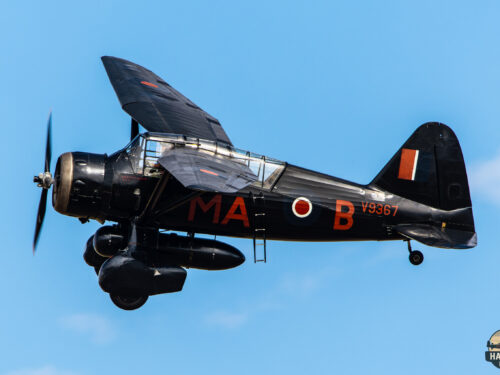
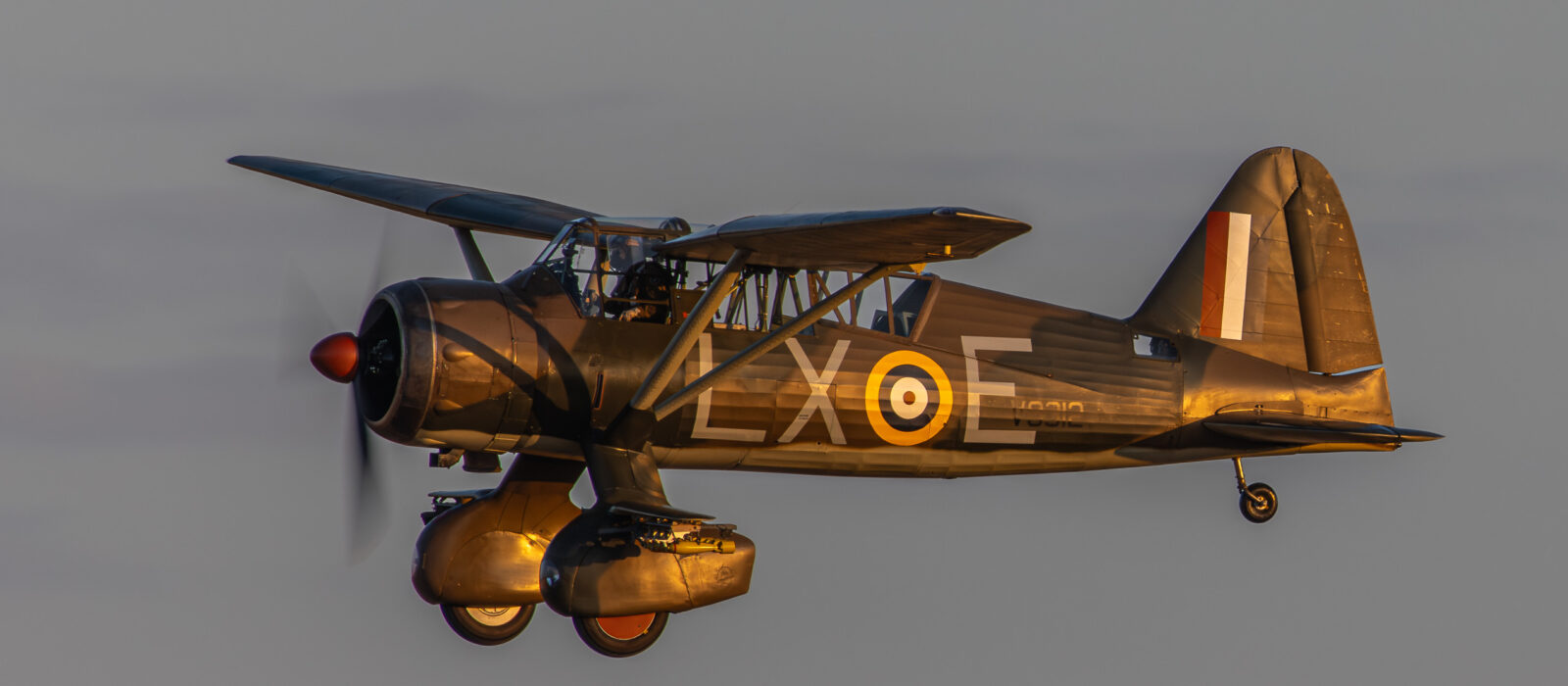
With its distinctive high-mounted wings, rugged undercarriage and exceptional short-field performance, the Westland Lysander V9312 is a remarkable survivor of Britain’s Second World War aviation heritage. Affectionately known as the “Lizzie”, this unusual aircraft was designed to work alongside ground forces, but its versatility would see it undertake a variety of demanding wartime duties.
Built by Westland Aircraft at Yeovil in 1940, V9312 entered Royal Air Force service in January 1941. It served with Nos. 4, 613 and 225 Squadrons, undertaking army cooperation duties and photographic reconnaissance. While serving with No. 225 Squadron, the aircraft flew low-level reconnaissance missions, recording enemy positions and gathering valuable intelligence.
The Lysander was purpose-built to operate from rough, improvised landing strips close to the front line. Its high-lift wing, automatic leading-edge slats and large flaps gave it outstanding low-speed handling, allowing it to take off and land in confined spaces where many other aircraft simply could not operate. Powered by a Bristol Mercury radial engine, the Mk IIIA could reach speeds of approximately 212 mph, but its real strength lay in its ability to get into and out of difficult locations.
In April 1942, V9312 suffered wing damage during a flight between York and Elstree. Following repairs, it was converted into a target tug for aerial gunnery practice. The aircraft was subsequently shipped to Canada in October 1942, where it served with the British Commonwealth Air Training Plan. Its final wartime flight took place in October 1944, after which it was retired from military service.
After decades in North America, the airframe was acquired by the Aircraft Restoration Company in 2003 and returned to the UK for an extensive restoration at Duxford. The project took approximately 15 years to complete, culminating in the engine being run again in August 2018. Later that month, V9312 took to the skies for the first time since 1944 — an extraordinary achievement for the restoration team.
Today, flying as G-CCOM, the Lysander wears the markings of No. 225 Squadron RAF, reflecting its own wartime history. Its classic camouflage, prominent undercarriage fairings and unmistakable silhouette make it a striking sight at historic aviation events. Unlike the black Lysanders associated with secret Special Operations Executive missions into occupied Europe, V9312 represents the aircraft’s original army cooperation and reconnaissance role.
More than eight decades after it was built, this rare aircraft continues to bring history to life. Every time its Bristol Mercury engine fires up and its broad wings lift it into the air, V9312 offers a glimpse into the ingenuity of wartime aviation and the dedication required to preserve these extraordinary machines.
A rare flying survivor, the Westland Lysander V9312 is a living tribute to the crews who flew it and the engineers who have ensured that the “Lizzie” continues to fly today.