The North American P-51 Mustang is best remembered as one of the outstanding fighters of the Second World War, but its story did not end in 1945. During the 1960s, the American company Cavalier Aircraft Corporation took surplus Mustangs and rebuilt them for a new generation of military service. These modernised aircraft were designed for ground attack and counter-insurgency missions, extending the Mustang’s working life into the jet age. “Miss Rebel” is a particularly fascinating example: a wartime-era Mustang airframe rebuilt as a Cavalier Mustang II, flown in combat by the Salvadoran Air Force, and now preserved in flying condition in Scandinavia.
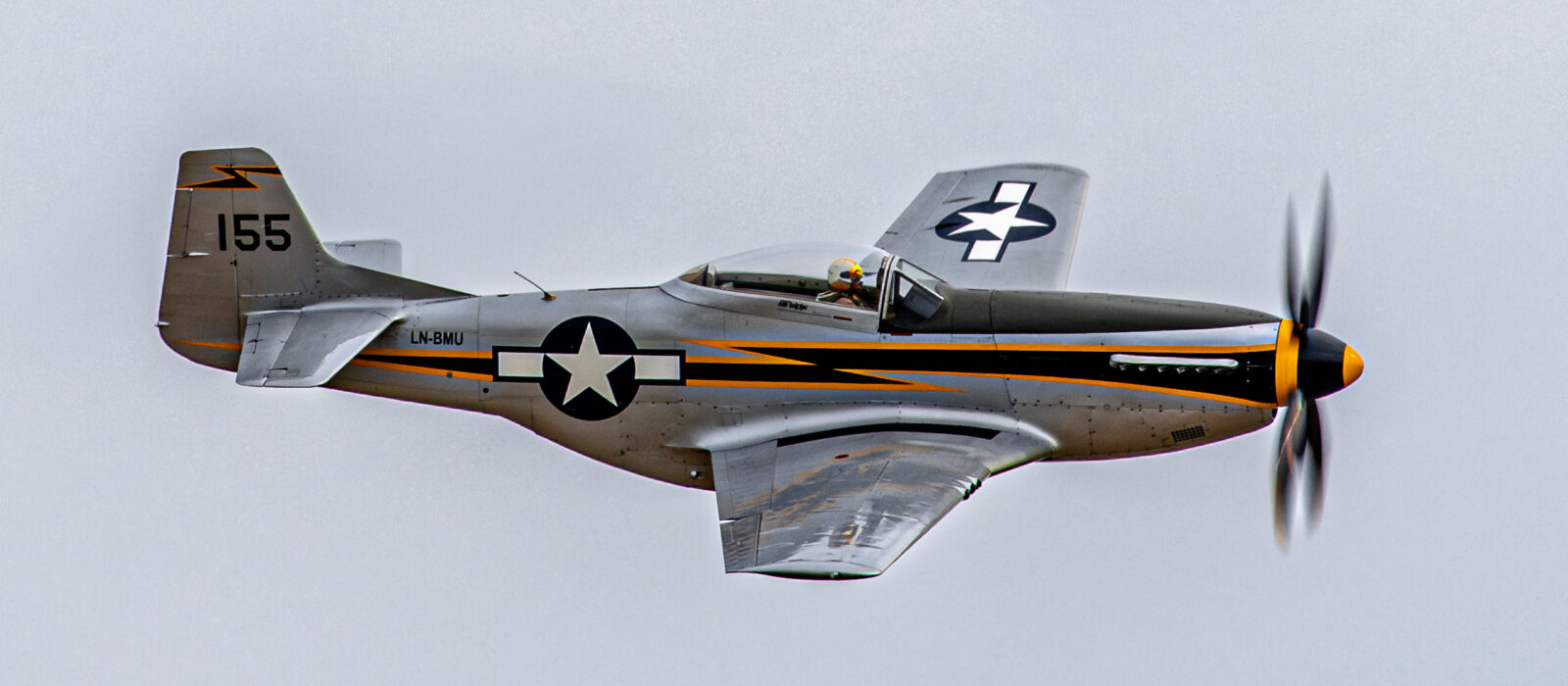
The aircraft now known as Miss Rebel carries construction number 111-28886 and currently flies under Norwegian registration LN-BMU. Its original Second World War identity is uncertain. The USAAF serial number 44-10753 was associated with the airframe after it returned to the United States, but available histories indicate that this was adopted rather than conclusively established as its original wartime serial. Its better-documented history begins in the late 1960s, when it was rebuilt by Cavalier Aircraft in Sarasota, Florida, for export to El Salvador.
Cavalier’s Mustang II programme reflected a very different era of military aviation. Rather than serving as a high-altitude escort fighter, the modified Mustang was intended for close air support, armed reconnaissance and counter-insurgency operations. The aircraft received structural improvements, additional underwing hardpoints, upgraded equipment and a taller vertical tail. Wingtip fuel tanks increased its range, allowing it to patrol remote areas for longer periods. These changes made the Mustang more suitable for the demands of smaller air forces that needed an effective, relatively economical combat aircraft.
In 1968, the aircraft was delivered to the Fuerza Aérea Salvadoreña (FAS) as FAS 405. It entered service during a period of regional tension in Central America, when El Salvador and neighbouring Honduras were engaged in a bitter dispute. In July 1969, the two countries fought the brief conflict popularly known as the Football War, named after the football matches that heightened tensions in the weeks preceding the fighting. The war involved air attacks and some of the last combat operations in which piston-engined fighters fought one another. Miss Rebel’s documented service with the Salvadoran Air Force connects it to this unusual late chapter in Mustang history.
After returning to the United States in 1974, the aircraft was registered N31FF and subsequently passed through civilian ownership. It later carried the registration N405HC before being sold to Sweden in 2006, where it became SE-BIL. In 2020, it moved to Norwegian registration LN-BMU under Biltema Nordic Services. Its military configuration and tall tail remained reminders of its Cavalier rebuild, distinguishing it from a standard wartime P-51D.
The aircraft’s present name and markings tell another story. In 2023, the Mustang received a new scheme inspired by “Miss Rebel,” flown by Captain Oran D. Watts of the 23rd Fighter Group in China during the Second World War. The yellow detailing and number 155 evoke that wartime identity, replacing the earlier red trim and FAS 405 markings. This is a commemorative paint scheme rather than a claim that the current airframe itself flew with Watts in China. The distinction matters: Miss Rebel combines a genuine post-war combat history with the appearance of a different Mustang from an earlier conflict.
The Mustang’s enduring appeal comes from its distinctive shape and remarkable versatility. Powered by a Rolls-Royce Merlin-derived V-12 engine, it combines a long nose, low-drag wing and powerful propeller with the ability to carry external stores. On the original P-51D, six .50-calibre machine guns provided the principal armament; Cavalier’s military conversions were further adapted to carry external weapons for ground-attack missions. Its survival into the late 1960s and beyond demonstrates how a successful wartime design could be adapted to meet very different military needs.
Today, Miss Rebel is operated by Biltema Nordic Services and remains a flying example of the Cavalier Mustang II. Its history stretches across several distinct periods: the uncertain origins of a wartime airframe, the modernisation programme of the 1960s, combat service in El Salvador and a later life as a European warbird. When it takes to the skies, the aircraft represents not just the celebrated Mustang of 1944, but also the lesser-known post-war story of the piston-engine fighter that refused to disappear.