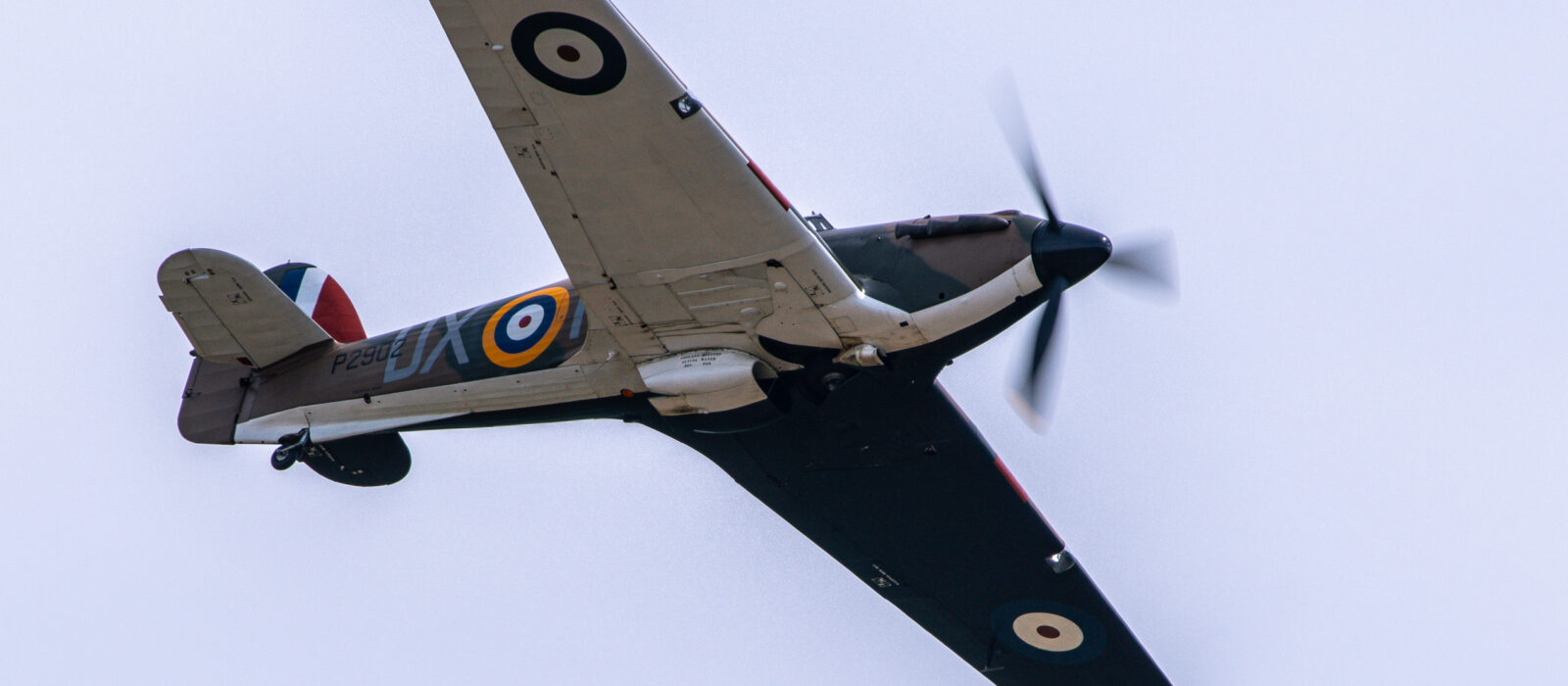
The Hawker Hurricane Mk I P2902 is a remarkable survivor from the desperate fighting over Dunkirk in May 1940. Built by Gloster Aircraft in 1939, this early Hurricane was among the RAF fighters sent to protect Allied troops as they retreated towards the French coast. Today, registered as G-ROBT, it is an airworthy reminder of the aircraft and pilots who fought to cover the evacuation of hundreds of thousands of Allied servicemen during Operation Dynamo.
P2902 was built at Gloster’s Brockworth factory in Gloucestershire and first flew around 20 October 1939. By May 1940, it had joined No. 245 Squadron RAF, based at RAF Drem in Scotland. The squadron initially flew shipping-protection patrols, but the German invasion of France and the Low Countries soon brought it into the intense fighting over the English Channel. As the Allied armies became trapped around Dunkirk, Hurricane squadrons were redeployed south to provide fighter cover.
On 31 May 1940, P2902 was flown by Pilot Officer Kenneth “Mac” McGlashan, a Scottish pilot serving with No. 245 Squadron. During operations over Dunkirk, his Hurricane was attacked by Messerschmitt Bf 109 fighters and badly damaged. Despite being wounded, McGlashan managed to force-land the aircraft on the beach near Dunkirk. He escaped and made his way to an evacuating vessel, while his Hurricane was left behind on the sand. The aircraft’s combat career had ended, but its story was far from over.
Over time, the wreck was stripped of useful parts and gradually buried by shifting sand. For decades, P2902 lay hidden beneath the dunes on the French coast. In 1988, French aviation enthusiasts recovered the remains, revealing a remarkably intact airframe beneath the sand. The wreck eventually made its way back to Britain, where restoration specialists began the lengthy task of returning it to flight.
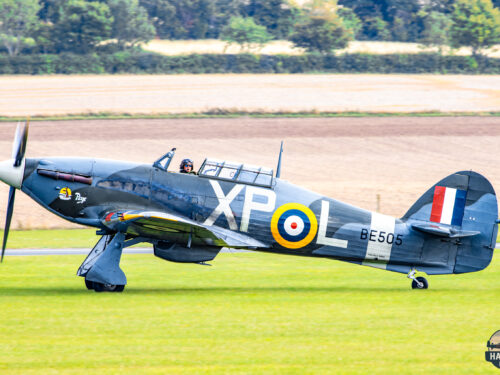
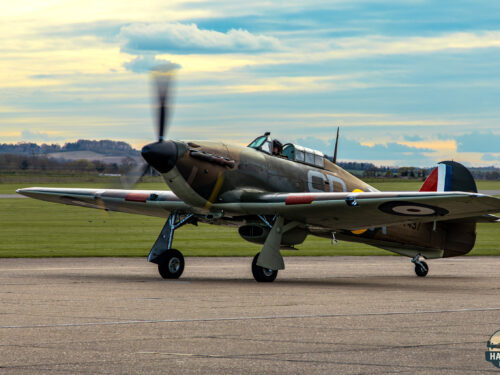
The restoration was an extensive undertaking, requiring years of work and the reconstruction of major components. Hawker Restorations ultimately completed the project, and on 19 June 2017, P2902 flew again from Elmsett in Suffolk. The aircraft was restored in the markings of No. 245 Squadron, coded DX-R—the “R” standing for “Robert”, reflected in its civil registration G-ROBT. Its return to the air was a remarkable achievement, bringing a Hurricane that had lain buried for almost half a century back to flying condition.
The early Hurricane Mk I was powered by a Rolls-Royce Merlin engine and armed with eight .303-inch Browning machine guns mounted in its wings. While the Spitfire often receives the greater share of public attention, the Hurricane was central to the RAF’s fighter strength in 1940. Its sturdy construction and dependable handling made it an effective combat aircraft, and Hurricanes accounted for a substantial proportion of the RAF’s victories during the Battle of Britain and the wider air campaign over France.
P2902’s story captures the urgency and sacrifice of the Dunkirk evacuation. From its early service with No. 245 Squadron to its forced landing on a French beach, decades buried beneath the sand, and eventual return to flight, it has survived against remarkable odds. When G-ROBT takes to the skies in its wartime markings, it honours Kenneth McGlashan and the many RAF pilots who flew into danger to protect the Allied evacuation in the spring of 1940.