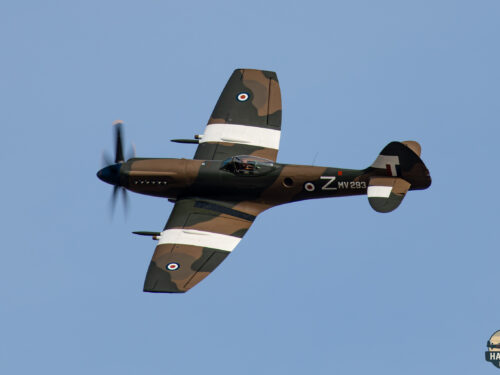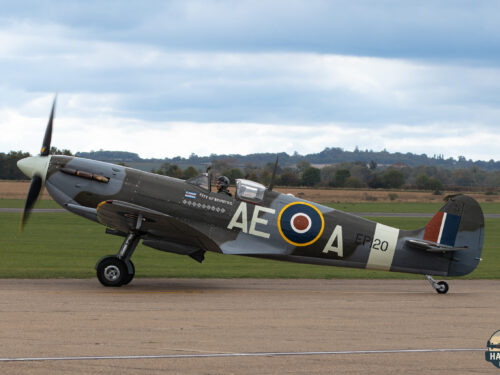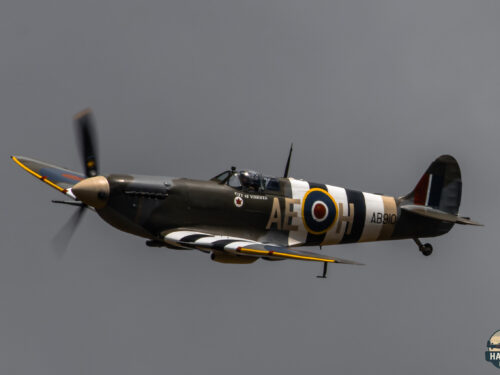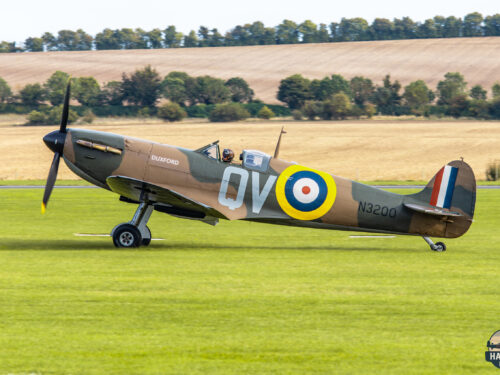
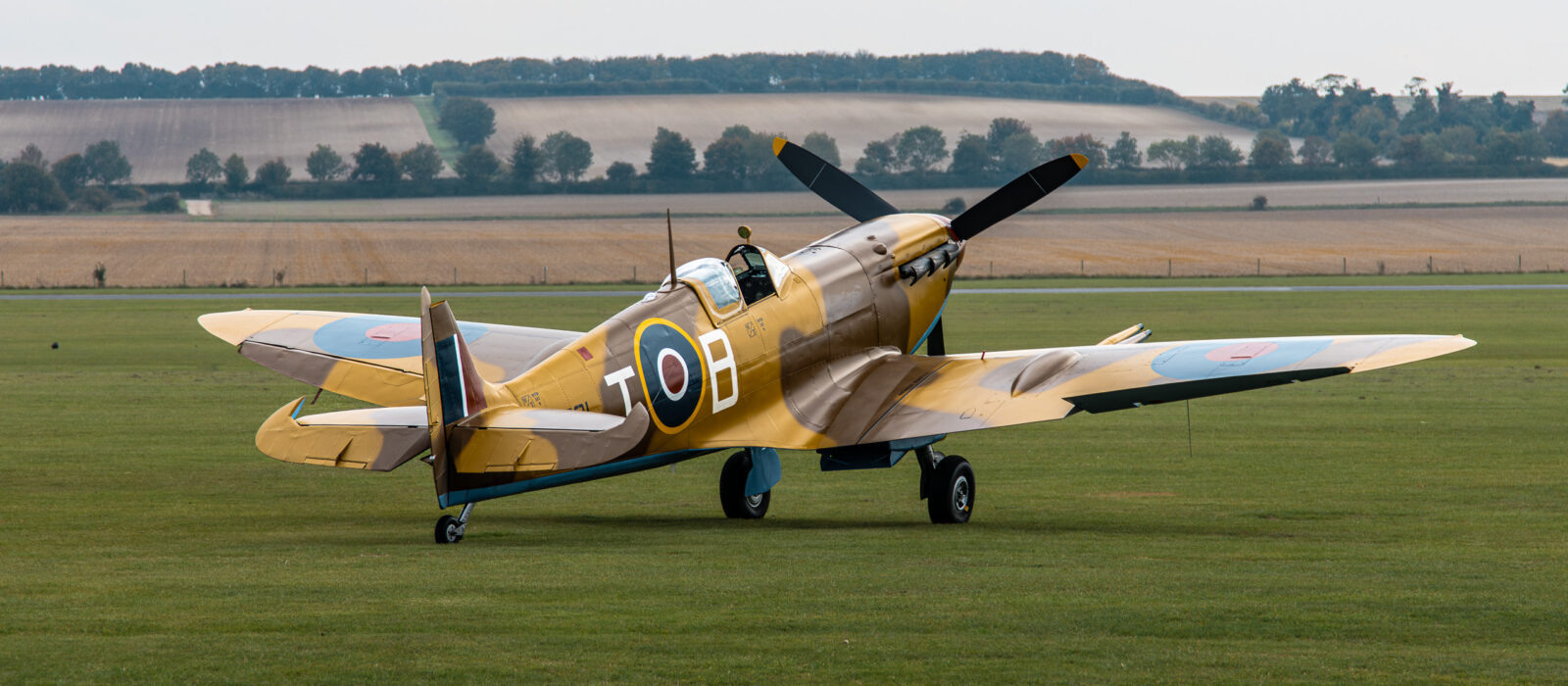
With its distinctive elliptical wings, powerful Merlin engine and rich Pacific War history, the Supermarine Spitfire Mk.Vc JG891 is a remarkable survivor of the Second World War. Although the Spitfire is most closely associated with the defence of Britain and the skies over Europe, JG891 tells a different story — one of the Royal Australian Air Force’s fight against Japanese forces across the islands of the South-West Pacific.
Built at the Castle Bromwich Aircraft Factory in 1942, JG891 was a Spitfire Mk.Vc (T), a version featuring four 20 mm Hispano cannon and a strengthened wing structure. Powered by a Rolls-Royce Merlin 46 engine, it was designed to deliver effective performance in demanding operational conditions. Following preparation for overseas service, the aircraft was shipped to Australia aboard the SS Tijuca, arriving in April 1943. It was subsequently taken on charge by the Royal Australian Air Force as A58-178.
The aircraft joined No. 79 Squadron RAAF, operating under the code UP-G. Serving in the Pacific theatre, the squadron supported Allied operations against Japanese forces in the region. JG891 became associated with the nickname “Tasmanian Devil”, reportedly carrying nose artwork depicting a map of Tasmania with a devil superimposed upon it — a distinctive identity for a fighter operating far from home.
Its wartime career came to an abrupt end on 12 January 1944 at Kiriwina in the Trobriand Islands, Papua New Guinea. During a landing in difficult conditions, the aircraft overturned after a flapless approach. The pilot, Flight Sergeant Dudley Albert Grinlington, survived with minor injuries. The Spitfire was written off, and its remains were abandoned in the surrounding undergrowth alongside other damaged aircraft.
For almost three decades, the wreckage remained in the Pacific before being rediscovered and recovered in 1973–74. What followed was an extraordinary restoration journey spanning New Zealand and Britain. The remains were acquired by Don Subritzky, who undertook a composite rebuild using components from more than one Spitfire airframe. After passing through further ownership, the project moved to the UK in 1999, where Historic Flying Ltd completed the restoration at Duxford.
On 2 November 2006, JG891 returned to the air for the first time since its wartime accident, registered as G-LFVC. After a period in the United States, the aircraft returned to Britain and was restored to flying condition once again.
Today, the Spitfire wears the markings of No. 249 Squadron RAF, representing aircraft JK879, flown by Flight Sergeant John G. “Jack” Hughes, a Canadian serving with the RAF in Malta during 1943. Its desert-style air filter and four-cannon wing configuration evoke the intense air war fought over the Mediterranean, a striking contrast to its own original service in the Pacific.
With its remarkable survival story, international restoration history and unmistakable Spitfire silhouette, JG891 is a powerful reminder of the aircraft’s global wartime service. From the tropical islands of the Pacific to the skies above Britain, this veteran fighter continues to connect modern audiences with the people and events that shaped aviation history.