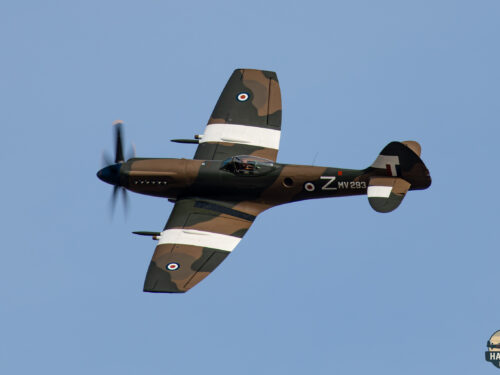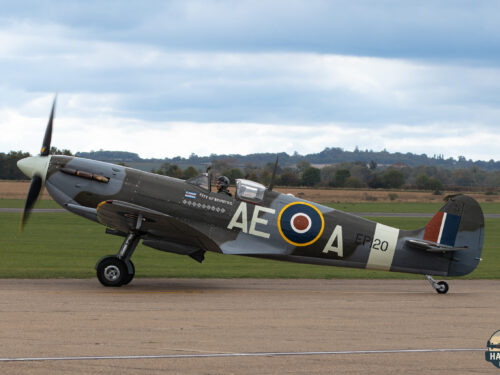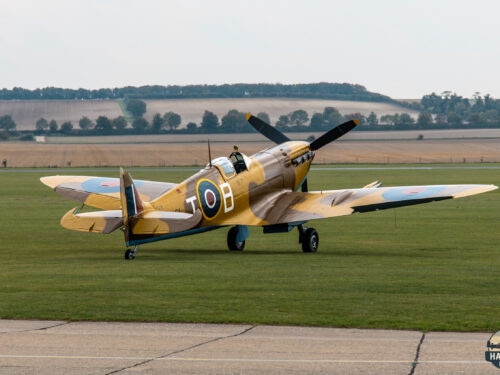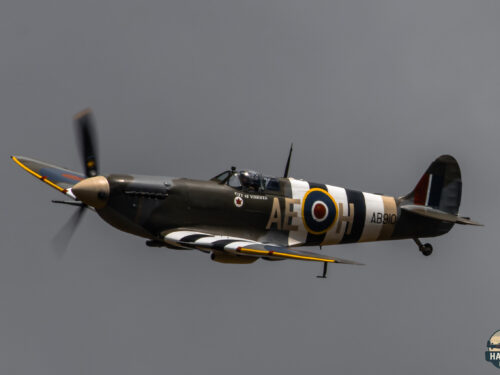
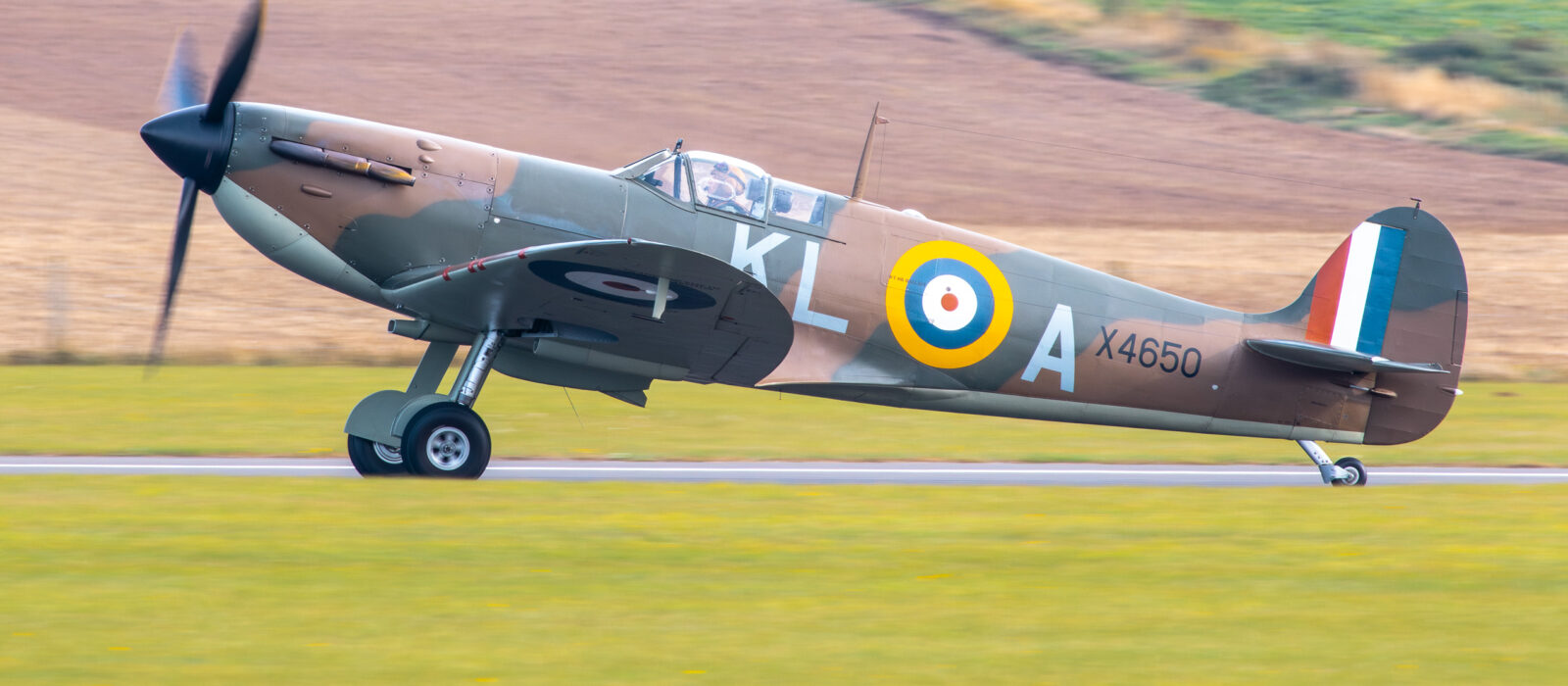
Few aircraft embody the spirit of the Battle of Britain era quite like the Supermarine Spitfire Mk.Ia. With its elegant elliptical wings, streamlined fuselage and unmistakable Rolls-Royce Merlin soundtrack, this early version of Britain’s most famous fighter represents the generation of aircraft that helped defend the nation during its darkest hours. Spitfire X4650 has a particularly remarkable story, involving a wartime accident, decades buried beside a river and an extraordinary restoration that returned it to the skies.
Built in 1940, X4650 was constructed at the Castle Bromwich Aircraft Factory in Birmingham and first flew on 23 October 1940, towards the end of the Battle of Britain. Powered by the Rolls-Royce Merlin III engine, the Mk.Ia could reach speeds of around 360 mph and was armed with eight .303-inch Browning machine guns. It was a formidable fighter for its time, combining speed, agility and a tight turning circle that made it a match for the German Messerschmitt Bf 109.
On 14 November 1940, X4650 joined No. 54 Squadron RAF at Catterick, North Yorkshire. Although it never saw combat, its operational career was tragically short. On 28 December 1940, during a training exercise at approximately 12,000 feet, X4650 collided with another Spitfire, X4276, flown by the New Zealand fighter ace Flight Lieutenant Alan Deere. During a practice attack, X4650’s propeller struck the tail of Deere’s aircraft, causing both fighters to crash. Fortunately, both pilots managed to bail out and survived.
The wreckage of X4650 came to rest beside the River Leven near Kirklevington. For decades, the remains lay undiscovered until the hot summer of 1976 lowered the river level and revealed the aircraft. The recovered components eventually came into the hands of Peter Monk, whose restoration team undertook the remarkable task of rebuilding the Spitfire. The project involved extensive work on the airframe, wings and engine, with restoration continuing at Biggin Hill.
On 9 March 2012, X4650 flew again for the first time in more than 71 years, registered as G-CGUK. Its return to the air was a remarkable achievement, transforming an aircraft once written off as a wartime loss into a flying tribute to the engineers and restorers who preserve Britain’s aviation heritage.
Today, X4650 is associated with Comanche Fighters and The Fighter Collection at Duxford. It is often seen wearing the markings KL-A of No. 54 Squadron, recreating its short period of RAF service. It also appeared in Christopher Nolan’s 2017 film Dunkirk, temporarily wearing the markings of another Spitfire, R9612, for the production.
X4650 is a reminder that not every historic aircraft has a story defined by combat victories. Sometimes, the story is about survival, rediscovery and the determination to bring a lost aeroplane back to life.
Supermarine Spitfire X4650 — a survivor of a wartime accident, recovered from the banks of a Yorkshire river and restored to fly once more. A remarkable piece of aviation history, still turning heads in the skies today.