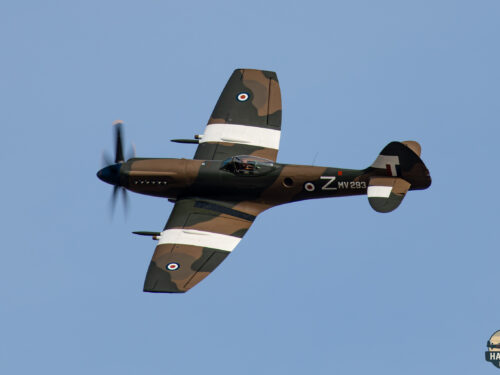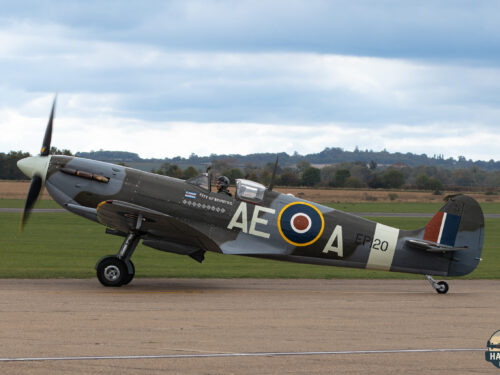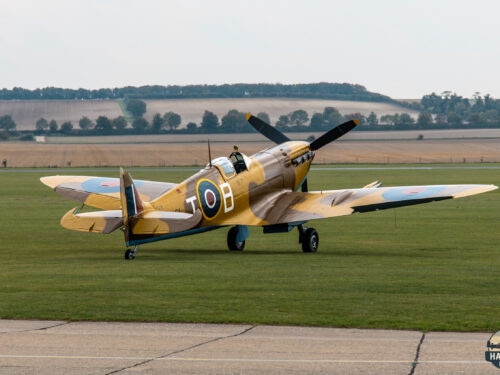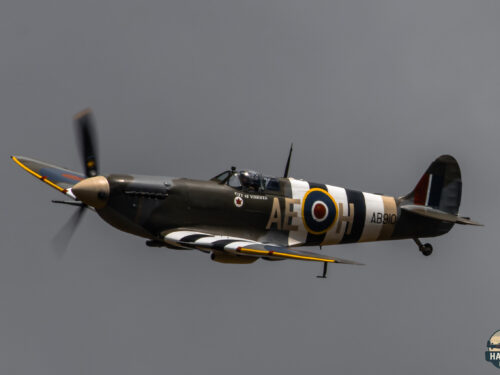
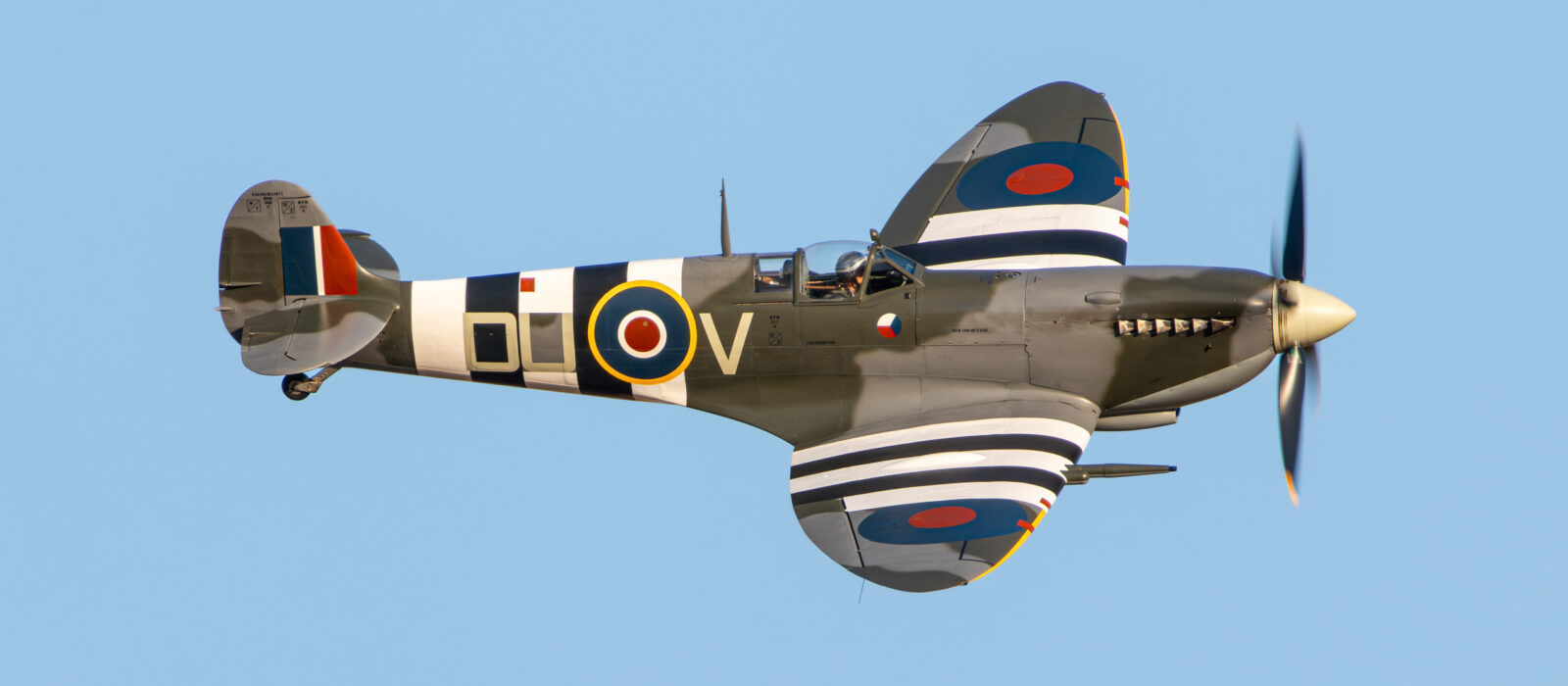
Few aircraft are as closely associated with Britain’s wartime story as the Supermarine Spitfire. With its elliptical wings, unmistakable silhouette and the distinctive roar of its Rolls-Royce Merlin engine, the Spitfire became an enduring symbol of the Allied fight for air superiority during the Second World War. Among the surviving examples, MK912 has a particularly remarkable history of combat service, international transfers and an extraordinary return to flight.
Built at the Castle Bromwich Aircraft Factory in Birmingham in 1944, MK912 was an LF Mk.IXc, a low-altitude fighter variant developed to counter the formidable German Focke-Wulf Fw 190. Powered by the Rolls-Royce Merlin 66 engine, the Mk.IX combined excellent manoeuvrability with strong performance at lower altitudes, making it a highly effective fighter during the later stages of the war.
MK912 entered service with No. 312 (Czechoslovak) Squadron RAF in May 1944. Flying from Britain in the weeks before D-Day, it took part in offensive operations against German targets in occupied France. Following the Allied landings in Normandy, the squadron shifted towards supporting the campaign on the continent. On 10 June 1944, while patrolling over the Normandy beachhead, MK912 was damaged by anti-aircraft fire. Despite this, it survived its wartime service and completed its final operational sortie in November 1944.
After the war, MK912 embarked on a second military career, serving first with the Royal Netherlands Air Force and later the Belgian Air Force. In Belgian service, it carried the designation SM-29 before being damaged in a landing accident in 1953. It was subsequently retired and preserved, beginning a long journey through collections before its eventual restoration to flying condition.
She was restored to flying condition in 2024 at Biggin Hill Heritage Hangar and is now owned and flown by Lilham Aviation.