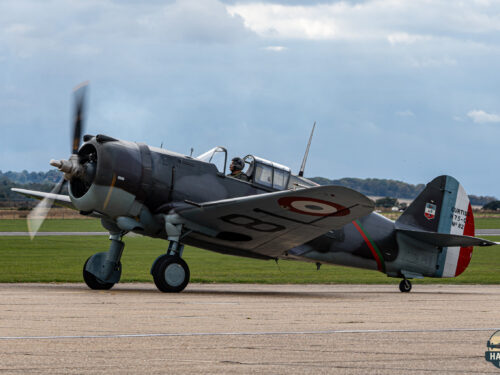
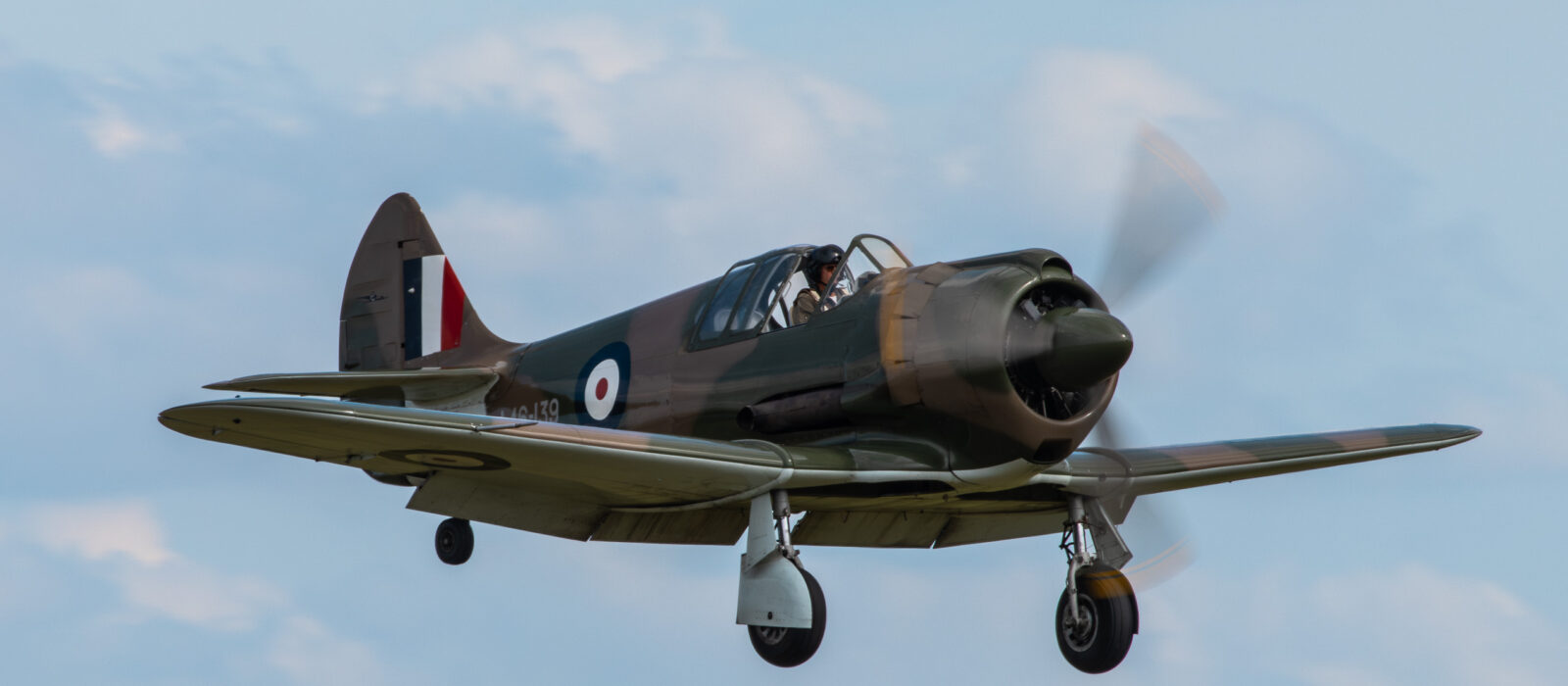
N32CS based out of Antwerp, Belgium dons the markings of A46-139 “Phooey”. Built in 1991 in the US from a number of Air frames she was sold to her current owners in 2014 and made her way to Belgium. She was certainly a highlight of the 2025 display season making her UK debut at the Shuttleworth Festival of Flight.
An unmistakable piece of Australian aviation history, the Commonwealth Aircraft Corporation (CAC) CA-13 Boomerang was born out of necessity during the dark days of the Second World War. Following Japan’s entry into the conflict in December 1941, Australia faced an urgent shortage of modern fighter aircraft, prompting the rapid development of a home-grown solution. The result was the Boomerang, the first Australian-designed and built fighter to enter production.
Developed by CAC engineer Fred David, the Boomerang made its maiden flight on 29 May 1942, an extraordinary achievement considering the urgency of the situation. Drawing heavily on the existing CAC Wirraway design and powered by a 1,200-horsepower Pratt & Whitney Twin Wasp radial engine, the aircraft combined a compact airframe with impressive manoeuvrability and rugged construction.
The CA-13 was an improved production variant, with refinements intended to enhance the aircraft’s performance and handling. Although the Boomerang could not match faster contemporary fighters in high-altitude combat, it found a valuable role supporting Allied ground forces. Operating over the challenging terrain of New Guinea and Bougainville, Boomerangs undertook reconnaissance, marked enemy positions and helped direct artillery fire, often flying at low level in demanding conditions.
Today, N32CS is associated with the historic Boomerang restoration known as A46-139, nicknamed Phooey. Rebuilt using components from multiple airframes, this aircraft represents the dedication and craftsmanship required to preserve rare wartime aviation history. It has also been associated with the Netherlands and previously carried the American registration N32CS.
With its distinctive nose, broad wings and unmistakable radial-engine profile, the Boomerang stands as a symbol of Australian ingenuity under pressure. More than simply a wartime stopgap, it became an effective army-cooperation aircraft and an enduring reminder of the people who designed, built and flew Australia’s own fighter during one of the most challenging periods in its history.