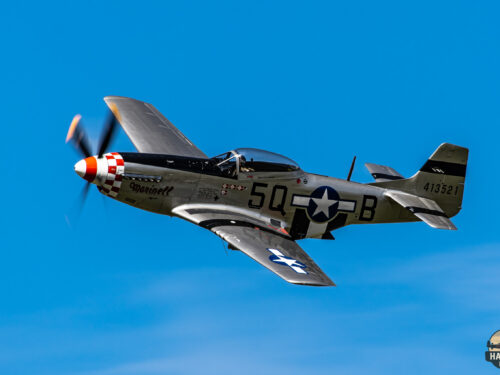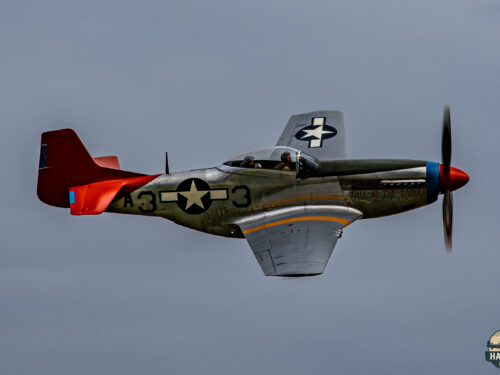
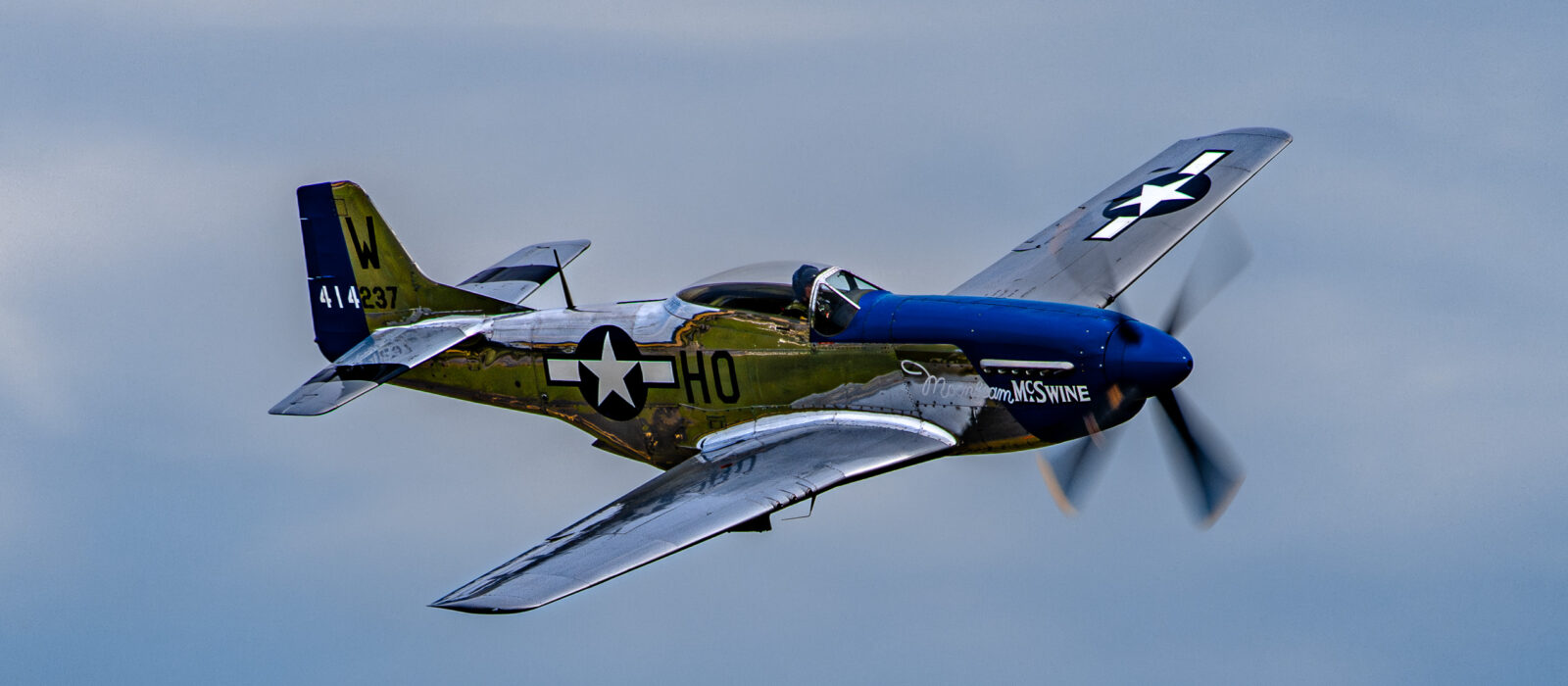
Few aircraft capture the spirit of the Second World War quite like the North American P-51D Mustang. With its sleek lines, distinctive bubble canopy and unmistakable Merlin engine note, the Mustang became one of the most celebrated fighters of the conflict. Today, G-MCSW, known as Moonbeam McSwine, brings that remarkable history to life in the skies over Britain.
Built at North American Aviation’s Inglewood, California, factory in October 1944, this Mustang originally carried the USAAF serial 44-73656. Although it was shipped to Britain in March 1945, it did not see combat and was returned to the United States later that year. It subsequently served with several Air National Guard units before entering civilian ownership in 1958.
The P-51D was the definitive development of the Mustang, featuring a distinctive teardrop canopy that gave pilots much-improved all-round visibility. Powered by the Packard-built Rolls-Royce Merlin V-1650-7 engine, producing approximately 1,490 horsepower, it could reach speeds of around 437 mph. Armed with six .50-calibre Browning machine guns, the Mustang excelled as both a long-range bomber escort and a fighter-bomber, helping Allied air forces establish air superiority over Europe during the final years of the war.
But it is the aircraft’s famous name and markings that make it particularly memorable. “Moonbeam McSwine” was the name given to a Mustang flown by Captain William T. “Bill” Whisner Jr. of the 487th Fighter Squadron, 352nd Fighter Group, the celebrated Blue-Nosed Bastards of Bodney. Whisner became a distinguished fighter ace, credited with 15½ aerial victories during the Second World War, and later achieved ace status again during the Korean War.
The name itself came from Li’l Abner, the American comic strip created by Al Capp, whose character Moonbeam McSwine was famous for her unconventional appearance and fondness for pigs. It was an unusual choice for a combat aircraft, but one that gave the Mustang a distinctive personality and a place in aviation folklore.
Importantly, G-MCSW is not the original wartime aircraft flown by Whisner. Today’s Mustang is airframe 44-73656, painted to recreate the appearance of the original Moonbeam McSwine, serial 44-12473. Over the decades, it passed through several owners and registrations, competed in American air races and became a familiar sight on the warbird circuit before arriving in the United Kingdom in 2025. It is now associated with Warbird Experiences at Biggin Hill.
With its striking 352nd Fighter Group markings, polished presence and powerful Merlin engine, Moonbeam McSwine is a spectacular tribute to the pilots who flew the Mustang in combat. Every pass across the airfield offers a glimpse into the era of long-range fighter escorts and the young airmen who ventured deep into enemy territory.